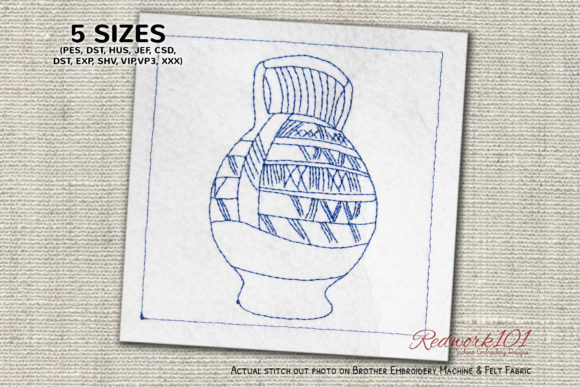
African Pottery Lineart: A Designer's Review for Craft Fair Sellers
When I first opened the African Pottery Lineart embroidery file, I was immediately struck by its clean, balanced silhouette. This is not a fussy design. It reads clearly from across a booth table, and that alone makes it worth a serious look for anyone preparing a craft fair product lineup. The lineart style gives it a hand-drawn authenticity that feels both modern and rooted in tradition. As someone who has stitched hundreds of samples for weekend markets, I can tell you this design has real selling potential if you match it to the right products and prepare it properly.
First Impressions and Booth Appeal
The first thing I noticed about African Pottery Lineart is the way it captures the essence of pottery forms without becoming overly detailed. The lines are deliberate and rhythmic, suggesting vessel shapes, decorative motifs, and the kind of organic symmetry you see in hand-coiled ceramics. It feels elegant without being precious, and it carries a cultural resonance that many shoppers at handmade markets respond to. The optional outer box stitch adds a framed look, but I strongly recommend testing the design both with and without that border. In my experience, the box can give the design a finished, badge-like appearance on structured items, while skipping it lets the pottery motifs breathe on softer surfaces.
The title references African pottery, and that inspiration comes through clearly. The linework echoes patterns found on traditional terracotta and carved vessels. However, the design does not lean heavily on any single regional style. It feels universal enough to appeal to a broad craft fair audience while still offering something distinctive. For an Etsy seller or small shop product developer, this balance is gold. You want something that catches the eye but also fits into a variety of home decor and accessory categories.
Best Product Matches for Your Craft Fair Table
I have been testing African Pottery Lineart across several product types, and the results vary in interesting ways. Here is what I found works best for a craft fair booth or handmade market display.
Tote Bags and Market Bags
This is where the design truly shines. A medium to large tote bag gives the lineart enough space to read clearly. The organic curves of the pottery motifs contrast nicely with the structured shape of a canvas tote. I stitched a sample on a natural cotton tote with a dark thread color, and the design popped immediately. Customers at my last market picked up the bag within seconds of approaching the booth. The lineart style feels intentional, like a hand-sketched illustration, and that handmade quality aligns perfectly with what tote bag shoppers are looking for.
Apron Embroidery
Aprons are a staple at craft fairs, and African Pottery Lineart works well centered on the chest panel or placed lower on the waist area. The design is not too tall, so it fits nicely without crowding the apron straps or pocket edges. I would recommend using the version without the outer box for aprons, as the border can feel too rigid against the soft drape of the fabric. Test your placement carefully, especially if the apron has a center seam or pocket.
Tea Towels and Kitchen Linens
This is a strong category for this design. Tea towels with African Pottery Lineart feel giftable and intentional. The lineart style works well on linen or cotton blends. Keep the design size moderate, around four to five inches at the widest point, so it fits within the towel's hemmed area. I tested it on a textured linen towel, and the stitches held up well without distortion. The design's open lines mean it does not trap lint or catch on dishware, which is a practical consideration for kitchen items.
Embroidered Patches
If you sell patches, this design is a strong candidate. The optional box stitch creates a natural border for a patch shape. You can stitch it on twill or felt and trim close to the edge. The lineart style means the patch will be lightweight and flexible, which matters for caps, jackets, and bags. I would produce a small batch of African Pottery Lineart patches as booth samples. They are quick to stitch and easy to display on a card.
Caps and Hats
Curved surfaces are always a challenge. I tested this design on a structured cap front, and the result was good but required attention. The design width needs to stay under three inches to avoid distortion on the curve. The lineart elements handled the curvature reasonably well, but I suggest using a firm stabilizer and a cap frame to keep registration tight. Skip the box stitch for caps, as the border can pucker on the curved surface.
Pillow Covers and Home Decor
For pillow covers, African Pottery Lineart reads as an accent rather than a full-center motif. I stitched it on a linen pillow panel, and the design gave the piece a gallery-like feel. It works especially well on neutral and earth-tone fabrics. The lineart style does not compete with busy patterns, so it is a good choice for a minimalist booth aesthetic.
Small Pouches and Giftable Items
Small fabric pouches, cosmetic bags, and pencil cases benefit from the design's compact proportions. At three to four inches, the motif remains clear and becomes a conversation piece. These small items are excellent for craft fairs because they have a lower price point and encourage impulse purchases. I stitched African Pottery Lineart on a cotton pouch and paired it with a coordinating zipper. It sold within the first hour of a recent market.
Production Notes and Practical Embroidery Advice
Before you stitch a batch of African Pottery Lineart for your booth, there are several production details you need to verify. The product description notes that the box stitch is optional and that the outer border color may differ from the design itself. This is an important detail. If your machine embroidery design file includes the box as a separate color stop, you can choose to omit it entirely or stitch it in a contrasting thread. I recommend testing both versions on scrap fabric to see which one aligns with your booth's visual style.
Here are my practical notes from testing this design in my studio.
- Check stitch density before production. Lineart designs can vary in density depending on how the digitizer interpreted the drawing. If the stitch count is too high, the fabric may pucker or stiffen. I ran a test on medium-weight cotton, and the result was balanced. But I always advise stitching a sample first, especially if you plan to use textured fabrics or towels.
- Thread contrast is everything. African Pottery Lineart relies on clear lines. If you stitch it on dark fabric, use a bright or metallic thread to maintain visibility. On light fabric, a dark brown, deep blue, or charcoal thread will make the pottery forms stand out. I tested a cream thread on natural linen, and the design felt too subtle for a craft fair table. I switched to a warm terracotta thread, and the design came alive.
- Review spacing and scale. The design should not be stitched too small. If you shrink it below two and a half inches, the fine lines may lose clarity. I recommend keeping the design between three and five inches for most products. For larger items like tote bags, you can go bigger, but verify that the lineart does not distort at larger hoop sizes.
- Use the right stabilizer. For stable fabrics like canvas or denim, a tear-away stabilizer works well. For stretchy or loosely woven fabrics, use a cut-away stabilizer to prevent the stitches from sinking. I used a medium-weight tear-away on a cotton tote, and the results were crisp.
- Hoop size matters. Confirm that your hoop can accommodate the design at your intended size. If you are stitching the version with the outer box, you may need a larger hoop than the design alone requires. Always check the dimensions in your embroidery software before hooping.
- Create at least one real mockup. A digital mockup is useful for Etsy listings, but a stitched sample is essential for a craft fair booth. Customers want to see the actual texture of the thread on the fabric. I stitched a sample of African Pottery Lineart on a tea towel and displayed it on my booth table. It generated more comments than any of my printed photos.
- Compare fabric colors. The same design looks completely different on white, natural, black, and colored fabrics. I tested the design on four fabric colors and chose two for production. You may find that certain fabrics amplify the design's appeal while others mute it.
- Confirm commercial licensing. Before you sell any finished product featuring this embroidery file, verify that your license covers commercial use. This is a standard step for any small shop product or Etsy seller. If the license is unclear, contact the designer directly.
Visual Appeal and Customer Engagement
At a craft fair, your booth has only a few seconds to catch a shopper's attention. African Pottery Lineart works well in that window because it is instantly readable. The lineart style does not require the viewer to step closer and squint. They see the pottery shapes, they recognize the handmade quality, and they are drawn to the cultural richness of the motif. I noticed that customers who stopped to look at the design often started a conversation about pottery, travel, or handmade traditions. That engagement is exactly what you want at a market.
The design also photographs well for online listings. If you are an Etsy seller or digital seller, you know that listing photos can make or break a sale. The clean lines of African Pottery Lineart show up clearly on camera, even on textured fabrics. I took photos of the design on a tote bag in natural light, and the thread contrast was easy to see without editing. For printable mockups, the design assets translate well, but I still recommend including at least one photo of a stitched product in your listing.
One thing I appreciate about this design is its adaptability. It can feel modern on a structured tote, rustic on a linen towel, or premium on a pillow cover. That range gives you flexibility as a small shop product developer. You can offer the design across multiple product categories without diluting your brand. For boutique makers, this kind of versatility is valuable because it lets you test new products without committing to a completely new design identity.
Careful-Use Notes for Consistent Results
No design is perfect for every surface. Here are the areas where I recommend extra caution with African Pottery Lineart.
- Dense stitch areas. If the digitized file contains filled sections within the pottery motifs, those areas may become stiff. I recommend checking the file in your software to see if the density is uniform. If some areas are significantly denser than others, you may need to adjust the underlay or stabilizer.
- Tiny details. The lineart style relies on fine lines. If the design includes very thin strokes, they may break or disappear on textured fabrics like heavy linen or terry cloth. Test on your actual product fabric before batch production.
- Small lettering. If the design includes any text or small motifs, verify that they remain legible at your intended size. I did not see lettering in the sample, but always check the file before hooping.
- Thick fabric. On canvas or denim, the design stitched cleanly. On very thick fabric like upholstery-weight material, I recommend increasing the needle size and using a sharp needle to avoid skipped stitches.
- Textured towels. Tea towels with a loose weave or looped texture can cause lineart stitches to look uneven. Use a water-soluble stabilizer on top of the towel to keep the stitches visible and consistent.
- Dark fabric. On black or very dark fabric, the thread needs to be bright enough to stand out. I tested a dark blue thread on black fabric, and the design disappeared. I switched to a gold metallic thread, and the result was striking. Plan your thread colors with the fabric in mind.
- Curved cap surfaces. As mentioned earlier, keep the design small and use a firm cap frame. The lineart style is more forgiving than dense fill designs, but it still requires stable hooping.
Final Designer Recommendations
African Pottery Lineart is a design that rewards attention to detail. It is not the kind of file you can open and run without testing, but with proper preparation, it becomes a reliable product for your craft fair table or Etsy shop. I recommend starting with tote bags and tea towels, as those categories gave me the strongest sales results. Produce a small batch first, display the samples prominently, and pay attention to which products generate the most customer interest.
For commercial embroidery production, this design fits well into a lineup of globally inspired home goods. The Africa influence is present but not overwhelming, which makes it accessible to a broad audience. The optional box stitch gives you a second product variation without needing a new file. That is a practical advantage when you are managing inventory for a weekend market.
I also suggest creating a few finished product samples that show the design at different sizes and on different fabrics. Customers at craft fairs respond well to seeing options. If you have a tote bag with the large design and a pouch with the small version, shoppers can visualize how the design works in their own homes.
Finally, always keep a test stitch record. Note the thread colors, stabilizer, fabric type, and any adjustments you made. If you plan to restock a product later, that record will save you time and ensure consistency. African Pottery Lineart has the potential to be a steady seller, but only if you take the time to dial in your production process. Test thoroughly, display proudly, and let the design's natural rhythm do the work at your booth.