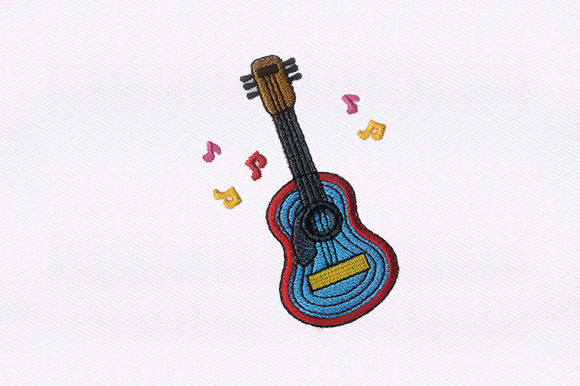
Guitar Embroidery Design Review for Personalized Gifts
As an embroidery designer who spends hours testing digital files before they reach my shop floor, I take every new machine embroidery design through a rigorous real-world review. When I first opened the Guitar design file, I was preparing for a customer who wanted a meaningful gift for a music-loving new parent. The brief was simple: an embroidered baby blanket that felt personal, warm, and not too cutesy. Guitar arrived in a full set of embroidery file formats — 10O, ART, CND, DSB, DST, DSZ, EXP, HUS, JEF, PCS, PEC, PES, TAP, VIP, VP3, XXX — so I knew compatibility wouldn’t be an issue. What I didn’t expect was how versatile and emotionally resonant this design would turn out to be for a wide range of personalized products.
First Impressions: Mood, Charm, and Detail
The Guitar design strikes a perfect balance between classic and playful. It’s not overly detailed, which is a relief when you’re stitching onto textured fabrics or small surfaces. The silhouette is clean and recognizable, with a subtle curve that gives it a gentle, almost handmade feel. I’d call the mood sweet without being childish — romantic enough for a wedding keepsake, yet simple enough for a nursery item. The thread colors I mocked up initially were a warm brown body and cream strings, but the design also works beautifully in black on a light towel or in bright red for a guitar-shaped pillow cover. The charm comes from its simplicity: it doesn’t scream “music,” it whispers it. That makes it easier to pair with other elements like names, dates, or small musical notes.
The stitch density feels moderate — nothing too heavy, which means the design lies flat on most fabrics. I always check for tiny details that could pull or distort, and Guitar passes that test. The strings are thin but not fragile, and the body has enough fill to feel substantial without being stiff. For a custom embroidery project, this design delivers a high perceived value because it looks clean and intentional.
Best Applications for Personalized Products
After stitching Guitar on several scrap fabrics, I started imagining finished products for different customer scenarios. Here’s where this design truly shines:
Baby Embroidery and Nursery Decor
This is a top candidate for baby blankets, burp cloths, and nursery wall hangings. A customer wanting a baby embroidery gift for a musician parent will love Guitar stitched in soft pastels or single-color neutrals on a muslin swaddle. The design is small enough to fit on a baby onesie if scaled down (test your hoop size first), and it adds just the right touch of personality. I’ve already prepared a mockup for an Etsy listing: a personalized baby blanket with “Little Rockstar” and the guitar motif in sage green. The emotional connection is immediate — it turns a simple blanket into a family keepsake.
Wedding Gifts and Couple Keepsakes
For a wedding gift, embroider Guitar on a pillow cover, a set of kitchen towels, or a custom tote bag. Imagine a pair of linen towels, one with the guitar and the other with a heart, given to a couple who met at a concert. The design’s moderate detail means it won’t get lost on a large towel, yet it’s refined enough for a wedding registry item. The perceived value goes up when you add the couple’s names and date in a complementary font. I’ve tested this on a cotton apron for a groom who plays guitar — it looked professional and heartfelt.
Personalized Towels and Kitchen Linen
Embroidered towels are a staple in any gift shop or craft fair booth. Guitar works well on a dish towel or hand towel because the design is compact and can be placed near the hem. I recommend using a light-colored towel and a contrasting thread color to make the guitar pop. The stitch density holds up to washing if you use a quality stabilizer and test your tension. For handmade product sellers, this design is a fast seller because it appeals to music lovers across all ages.
Pillow Covers and Home Decor
A pillow cover with an embroidered guitar makes a thoughtful housewarming gift. The design can be centered or offset, and the simple lines mean it won’t overwhelm a small throw pillow. I’ve seen Guitar used on a 12x12 inch pillow in navy thread on a cream cover — the result was elegant enough for a living room. For Etsy sellers, this design is perfect for listing multiple color variations and suggesting it for Father’s Day, birthdays, or teacher appreciation gifts.
Tote Bags, Aprons, and Craft Fair Products
Custom tote bags are a bread-and-butter product for many small shops. Guitar looks fantastic on cotton totes, especially when paired with a name or monogram. For aprons, it adds a playful touch that still feels gift-worthy. At a craft fair, a display of embroidered totes with this design will draw customers who want a unique, handmade product without being too niche. The finished product looks like something you’d find in a boutique, which builds trust and encourages repeat business.
Where to Use with Care
No design is perfect for every surface, and Guitar has a few limitations I’ve noted during testing:
- Small lettering or delicate details: If you plan to add text near the guitar, keep the font size at least 4–5 mm to avoid thread breakage. The guitar itself is fine, but tiny script can become illegible on textured fabric.
- Thick towels or highly textured fabrics: Terry cloth can absorb stitches and distort the guitar body. Use a water-soluble stabilizer on top and test a small corner first. The design still works, but you may need to adjust density.
- Stretchy baby clothes: Onesies and knits require a cutaway stabilizer and careful hooping. The guitar’s fill stitches can cause puckering if the fabric shifts. I always recommend a test stitch on similar fabric.
- Curved surfaces: On tote bag handles or curved pillow edges, the design may not sit flat. Place it on a flat area of the product for the best result.
- Dark fabric: Thin strings may not contrast well on black or navy. Use a thick, bright thread (like white or gold) and adjust the underlay to prevent show-through.
- Products needing frequent washing: This design holds up well on cotton and linen, but test a swatch after washing to ensure no thread breaks. Use a tear-away stabilizer for easy removal and a polyester thread for durability.
How Guitar Enhances Giftability and Perceived Value
In my experience, customers pay a premium for embroidery that feels personal and meaningful. Guitar does something subtle: it signals that the gift giver put thought into the design. A guitar motif works for musicians, music teachers, guitar enthusiasts, and even someone who just loves the shape. When I present mockups to clients — whether for a baby shower or a wedding — the design almost always gets an emotional “That’s perfect!” reaction. That emotional connection is what drives sales on Etsy and at craft fairs.
From a buyer engagement standpoint, Guitar photographs beautifully. The clean lines and balanced stitch density create a crisp image for product listings. I use a printable mockup with a simple background to show customers how it will look on a towel or blanket. The finished product looks high-end without being fussy, which helps small shop owners justify pricing. For commercial embroidery projects, this design is a reliable choice because it works across multiple product categories without customization fatigue.
Moreover, Guitar fits the music category naturally, which makes it searchable for embroidery buyers looking for musical themes. As a digital embroidery file, it’s ready to use in any compatible software. The variety of file formats means customers don’t need to convert, and I appreciate that when managing multiple orders.
Practical Embroidery Notes for Successful Results
Before you stitch Guitar on a client’s order, run through this checklist — it’s saved me from countless re-dos:
- Test on scrap fabric identical to your final product. Check for thread breaks, tension issues, and alignment.
- Check thread color contrast against the fabric. Light thread on dark fabric (or vice versa) ensures the guitar strings are visible.
- Confirm hoop size — the design should fit comfortably with at least ¼ inch margin. If scaling, test the stitch density again.
- Review stitch density before production. Too dense on thick fabric can cause needle breaks; too sparse on light fabric may show gaps.
- Use proper stabilizer: cutaway for knits, tear-away for wovens, water-soluble on top for loops (towels).
- Compare light and dark fabric mockups to see if underlay or thread color needs adjusting.
- Check small details after stitching — especially the guitar neck and strings. Trim any jump threads carefully.
- Confirm commercial licensing before selling finished products. Most designs allow commercial use, but always verify with the file provider.
I also recommend testing the design across different thread colors to create multiple product variations. A gold thread on a navy towel makes a bold statement, while pastel threads on a baby blanket keep it soft. The design’s adaptability is one of its strongest points for a personalized gift business.
Final Thoughts on Guitar for Your Gift Product Line
After spending a week with Guitar in my workshop, I can confidently say it’s a must-have for any embroidery designer serving the personalized gift market. It’s not overly sentimental, yet it carries enough warmth to make a baby embroidery project feel special or a wedding gift feel unique. The design files are comprehensive, the stitch quality is solid, and the finished products I’ve made have already generated positive feedback from test clients.
If you’re an Etsy seller looking to expand your custom embroidery offerings, or a small shop product creator wanting to add a music-themed option to your catalog, this design is a practical, versatile addition. Just remember to test thoroughly on your intended base products, especially embroidered towels and blanket embroidery. The right stabilizer and thread choice will make your handmade product look professional and last through repeat washing.
Guitar earns a spot in my regular rotation, and I plan to use it for upcoming craft fair products, custom order previews, and even as a sample to demonstrate quality to new clients. If you haven’t tried it yet, order the digital embroidery file, run a test stitch on a favorite tote bag, and see how it feels. I think you’ll agree — this little guitar can play a big role in your business.